
Key points at a glance
- Microfibre cloths consist predominantly of polyester with a proportion of polyamide; the fine, split fibres absorb water and dirt through capillary action.
- Grammage describes how dense and heavy the fabric is: light cloths lie flat, heavy cloths absorb more liquid.
- Short-pile cloths are suitable for glass, the cockpit and removing polish, while high-pile cloths are suitable for drying the paintwork.
- Separating cloths by area of use – paintwork, glass, wheels, interior – prevents abrasive and road dirt from getting onto the paintwork.
- Microfibre cloths are washed without fabric softener because fabric softener forms a film around the fibre and reduces absorbency.
For an overview: Cleaning cloths: materials and areas of use
Verified test results
- We currently have no verified test results from independent publishers on this topic. As soon as published tests exist, we will add them here with their source.
How a microfibre cloth is constructed
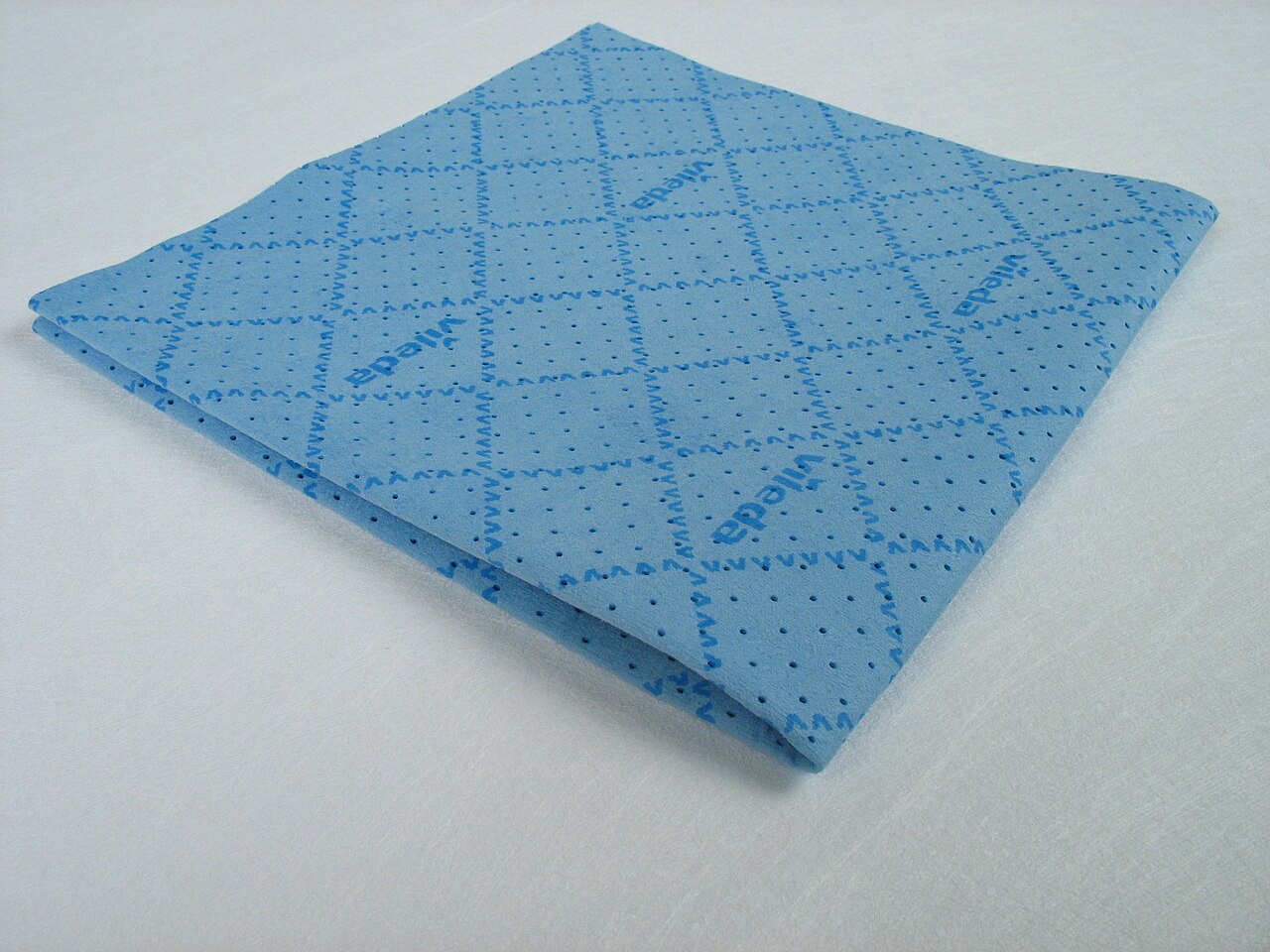
A microfibre cloth is a fabric made from very fine synthetic fibres that are considerably thinner than a human hair. This makes the surface of a cloth very large, and precisely this large surface is the reason why microfibre holds water, dust and fine road dirt well. Fine capillaries form between the fibres, into which liquid penetrates and is held there.
Many cloths are additionally split mechanically or chemically. In this process, each fibre divides lengthwise into several finer individual fibres. This increases the surface area once again and makes the cloth softer, more absorbent and gentler on sensitive surfaces such as clear coat or display films in the interior.
Polyester and polyamide
Polyester forms the basis of most microfibre fabrics. It is dimensionally stable, absorbs hardly any water and ensures that the cloth retains its shape. Polyamide is blended in because it binds water better and gives the cloth its typical softness. Typical blends consist of a predominant polyester proportion with a smaller polyamide proportion; the higher the polyamide proportion, the more absorbent and softer the cloth feels, but the more sensitive it also is to heat and friction.
Grammage
Grammage is stated in grams per square metre and describes how much material is in a cloth. Light cloths are thin, flexible and well suited to glass, dashboards and tight spaces. Medium cloths are the all-rounder for the interior, trim strips and removing care products. Heavy, high-pile cloths absorb considerably more water and are therefore used for drying the paintwork after washing. A heavy cloth is not automatically better: on glass, a thick cloth is more likely to leave streaks than a thin, short-pile cloth.
Short pile, high pile and waffle structure
Pile describes the length of the fibres on the surface. Short pile lies flat and exerts only little friction when wiping. High pile stands up, absorbs liquid into the fibres and lies flat on the surface when wiping. Waffle structures have a ribbed, box-shaped surface that absorbs water and distributes it during drying.
Edges: stitched, bound or laser-cut
The edge is the most critical point on a cloth during paintwork work. A soft, stitched or bound edge cannot leave scratches as long as the thread is cleanly processed. A heat-sealed, cut edge does not fray, but it is harder and should not be pulled over sensitive paintwork with pressure. When buying, it is worth looking at the seam: loose threads or hard glued areas are a disqualifying factor for work on paintwork.
Properties in comparison
| Feature | Characteristic | Typical use |
|---|---|---|
| Short pile | smooth, dense surface | Glass, cockpit, removing polish |
| High pile | long, soft fibres | Drying paintwork, sensitive surfaces |
| Waffle structure | ribbed surface | Drying, distributing spray care |
| Stitched or bound edge | soft fabric edge | Work on paintwork and glass |
| Laser-cut edge | heat-sealed edge | Surfaces without strong pressure |
| Colour coding | different cloth colours | Separation of areas of use |
Areas of use: which cloth belongs where
The most important rule in car care is separation by area of use. A cloth that you have used to clean wheels or door shuts carries abrasive particles and metal shavings into the fibre and spreads them over the paintwork the next time. A simple colour system – for example one colour for paintwork, one for glass, one for the interior, one for wheels – maintains this separation permanently. You can find an overview of other cloth types in the guide to car care cloths.
Drying paintwork
Large, high-pile cloths are suitable for drying after hand washing. You place the cloth flat on the wet surface and pull it off without pressure, instead of rubbing it dry across the paintwork. A dry cloth absorbs water only to a limited extent; as soon as it is saturated, it is replaced. For large surfaces such as the roof and bonnet, two cloths used alternately are practical.
Removing polish and wax
Short- to medium-pile cloths with a soft edge are suitable for removing polish and wax residues. Work in small areas, turn the cloth after a few strokes and replace it as soon as product residues have clogged it. How to process polish and sealant correctly is explained in the paintwork care section.
Glass and windows
For windows and mirrors, the rule is: short-pile, clean and dry. A dedicated glass cloth prevents care product residues from paintwork care from ending up as streaks on the window. Exterior and interior glass get separate cloths because different residues occur inside than outside.
Interior, plastic and leather
In the interior, you work with light, short-pile cloths. They absorb cleaner without getting caught in crevices and can be folded around the edges of ventilation nozzles or switches. For plastic, leather and fabric covers, you use separate cloths so that cleaning agents are not carried between materials.
Wheels and door shuts
For wheels and door shuts, you use dedicated, robust cloths that are no longer used on the paintwork afterwards. The wheel cleaning process is described in the wheels and tyres section.
Washing, drying and storing microfibre cloths
Microfibre cloths do not belong in the machine together with terry towels or clothing. Cotton fibres settle in the microfibre and make the cloth lint. Always wash cloths from car care separately, ideally in a laundry bag that prevents individual cloths from getting between the drum and the seal.
Washing
Use a liquid, preferably low-residue detergent without fabric softener and without care components. Detergent with fabric softener or scent beads forms a film around the fibre that repels water – the cloth then absorbs noticeably less. Boiling washes are not necessary for microfibre; the manufacturer's information on the label takes priority because heat can fuse the fine fibres.
Drying and storing
Cloths are best dried in the air or at low temperature in the dryer. Strong drying with high heat makes the fibre brittle. Store dry cloths in a closed box or drawer, not openly in the garage: dust and metal abrasion otherwise settle on the fibre and become a risk on the next contact with paintwork.
When a cloth should be replaced
A microfibre cloth no longer belongs in paintwork care if it becomes hard, permanently smells, feels rough or has visible foreign bodies stuck in the fibre. Such cloths are candidates for wheels, door shuts or the engine bay – or for the bin. You can also find tips on durability and correct washing in the guide to microfibre care.
Typical mistakes
- Using fabric softener. The fabric softener film makes the cloth water-repellent; afterwards it only draws water across the surface.
- Throwing all cloths into one laundry basket. Glass, paintwork and wheel cloths mix, and grains of sand end up on the paintwork.
- Rubbing on dry paintwork. Dust acts like sandpaper. Before drying-wiping, remove dust from the paintwork or work wet.
- Applying too much pressure. Pressure generates frictional heat and spreads dirt; the cloth should glide, not scrub.
- Continuing to use dropped cloths. A cloth that has fallen on the floor is replaced – without exception.
- Storing wet cloths in the box. Moisture leads to odour and mildew stains in the fibre.
Gentle handling of paintwork and materials
During paintwork care, work in the shade and on cool bodywork if possible, because care products dry faster on a warm surface and are harder to remove. Wear gloves when using cleaners and observe the manufacturer's information on dilution and contact time. Preparatory work such as removing insect remains or tar does not belong on the cloth with which you subsequently dry the entire paintwork.
Accessories that make the work easier
A laundry bag protects the cloths in the machine, a flat storage box keeps them dust-free, and a second set of cloths means you do not have to wash in between during a wash. Spray bottles for cleaners and lubricants complete the equipment; a clean bucket with a Grit Guard prevents dirt from the wash water from getting back onto the paintwork.
Conclusion
Microfibre cloths are not a by-product in car care, but the tool that most frequently comes into contact with the paintwork. What matters is a clean edge, the right grammage and structure for the area of use, and care without fabric softener. Anyone who separates cloths by colour and task prevents most scratches that at first glance look like paintwork damage but actually come from the cloth. A few well-made cloths are enough for the basic equipment – more cloths do not replace clean separation.
Frequently asked questions
How do I recognise a good microfibre cloth?
By a soft, cleanly processed edge without hard glued areas, an even pile without lint and a label that states material, grammage and washing instructions. Cheap cloths are often recognisable by scratchy edges and by the fact that they lint at the first touch.
Can I wash microfibre cloths with normal laundry?
Better not. Cotton fibres settle in the microfibre and make the cloth lint. Wash car care cloths separately, without fabric softener and without care components in the detergent.
Why do my microfibre cloths lint?
Usually cotton from mixed laundry or a poorly made cloth is behind it. Incorrect drying at high heat can also damage the fibre. Linting increases when the cloth is rubbed on dry paintwork.
How many cloths do I need for a car wash?
For a normal passenger car, two to three drying cloths and one cloth each for glass, interior and wheels are sensible. For large vehicles or soft water, an additional drying cloth for alternating use is worthwhile.
Can I use the same cloth for glass and paintwork?
Only with a freshly washed cloth and with care: glass cloths are short-pile and good for streaks, but less absorbent on the paintwork. Separation by colour is more sensible so that cleaner residues do not get onto the paintwork.
How often should I wash microfibre cloths?
After every use. Cloths that have been in contact with care products, wheel cleaner or interior cleaner belong in the wash immediately so that residues do not become fixed in the fibre.