
Car washing: instructions, shampoo and accessories
Regular washing is the simplest form of paint care: what does not remain on the surface cannot take effect. According to vergleich.org, German car owners clean their car up to seven times a year; the site cites a survey by TNS Infratest. How well a wash turns out depends less on the effort than on the order of the steps and on which products and cloths are used.
Here you will find an overview of the product groups for washing, a short buying guide and notes on which method suits which vehicle and situation.
What works together when washing a car
A wash consists of four sections: loosening coarse dirt, washing the surfaces, clear rinsing and drying. Each section requires its own aids, and none can be meaningfully shortened. If the dirt is not soaked before washing, it migrates on the first wipe into the wash mitt and from there as a fine scratch into the clear coat. If it is not clear-rinsed, shampoo film and loosened dirt remain and dry on. If it is not dried, the evaporating water leaves limescale marks.
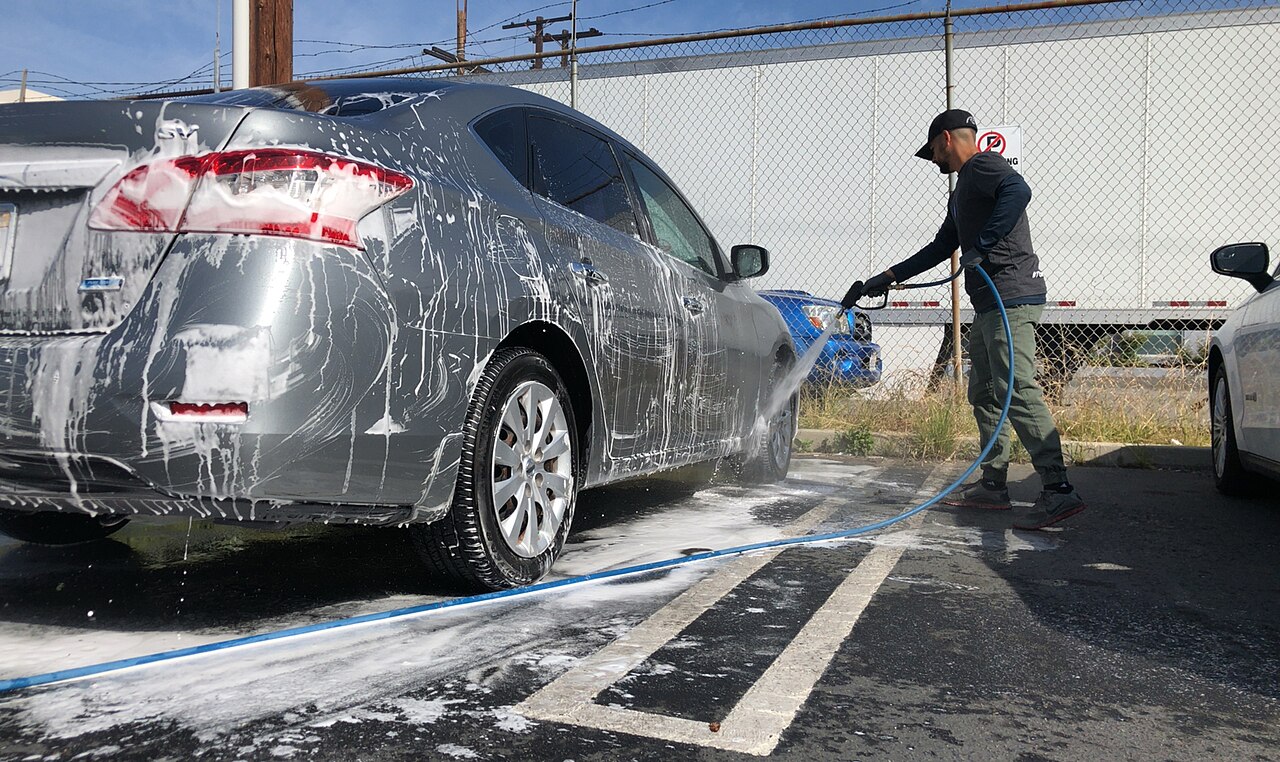
The order is also important: thought from bottom to top, rims and tires are the dirtiest places on the vehicle and are cleaned first so that the spray mist from this work does not get onto surfaces that have already been washed.
Shampoo, foam and drying at a glance
The product groups for washing differ mainly in where in the wash they are used.
Car shampoo
Car shampoo is the core of hand washing. It is diluted as a concentrate with water according to the manufacturer's instructions, is intended to loosen dirt and road film and at the same time remove as little as possible from an existing wax or sealant layer. For hand washing, what matters most is that the shampoo foams well and can be rinsed off without residue. Dosing instructions are part of the application: too little shampoo reduces lubricity, too much leaves film.
Foam cannon and Snow Foam
Pre-washing with foam is an intermediate step between soaking and hand washing. A thick foam lays itself on the surfaces, loosens coarse dirt and runs off slowly before the wash mitt even touches the paint. This method requires a pressure washer or a foam cannon with suitable dilution. Anyone washing without a device replaces the step with thorough rinsing and longer soaking.
Drying towels
After clear rinsing, drying decides the final result. Absorbent drying towels absorb water instead of pushing it around, and can be pulled over the surface without pressure. Important is a clean, soft cloth without hard edges or labels that could touch the paint.
Hand washing, car wash or wash tunnel
The three ways differ in effort, control and risk. Hand washing gives you full control over order, products and pressure, but costs time and water. The car wash works with textile or foam brushes and is fast, but leaves you no control over the individual steps. The wash tunnel adds drying and sometimes care programs to the wash, but also works with brushes or textiles that can carry dirt from previous vehicles.
For vehicles with fresh sealant, dark paint or sensitive wraps, hand washing is the gentlest option. How to carry it out step by step is described in the guide to hand washing. If you want to compare the programs and limits of the two machine-based ways, the comparison of car wash and wash tunnel will help.
What to look for when buying
- Intended use first: shampoo for hand washing, foam for pre-washing, cloth for drying – every product belongs at a specific point in the process.
- Dosing and yield: concentrates are diluted; the information on the bottle determines how far a fill quantity goes.
- Compatibility with paint protection: a shampoo that strongly strips wax or sealant shortens the protection and thus the care effort.
- Material of cloths and mitts: soft microfiber with cleanly sewn edges is the safer choice compared with hard or scratchy textiles.
- Accessories that fit: wheel brush, bucket with dirt sieve and a second bucket are not extras but a prerequisite for a clean wash.
Anyone who wants to extend the wash with a foam pre-wash will find suitable devices and products in the article on the foam cannon. For drying without water spots, a look at drying towels is worthwhile.
How often should I wash my car?
That depends on weather, location and use. After drives with road salt, bird droppings or insect remains, a wash soon is advisable because these residues stress the paint more than ordinary dust.
Can I use dish soap instead of car shampoo?
We advise against it. Dish soap is designed for dishes and grease, car shampoo for painted surfaces and existing protective layers. For regular washing, a shampoo is the more suitable choice.
Do I wash the rims or the paint first?
The rims and tires first. They are the most heavily soiled, and the spray mist from this work should not get onto paint surfaces that have already been cleaned.
Why is direct sunlight problematic?
On hot paint, the water dries too quickly, shampoo can dry on and limescale marks form. Work in the shade or under overcast sky and wash section by section.
Do I need a pressure washer?
No. A hose or several water canisters are enough for hand washing. A pressure washer makes rinsing and foam pre-washing easier, but is not a requirement.
What do I do about bird droppings on the paint?
Do not wipe dry. Soak the spot with plenty of water, loosen it carefully and rinse afterwards – this way the dirt does not remain on the surface as an abrasive.