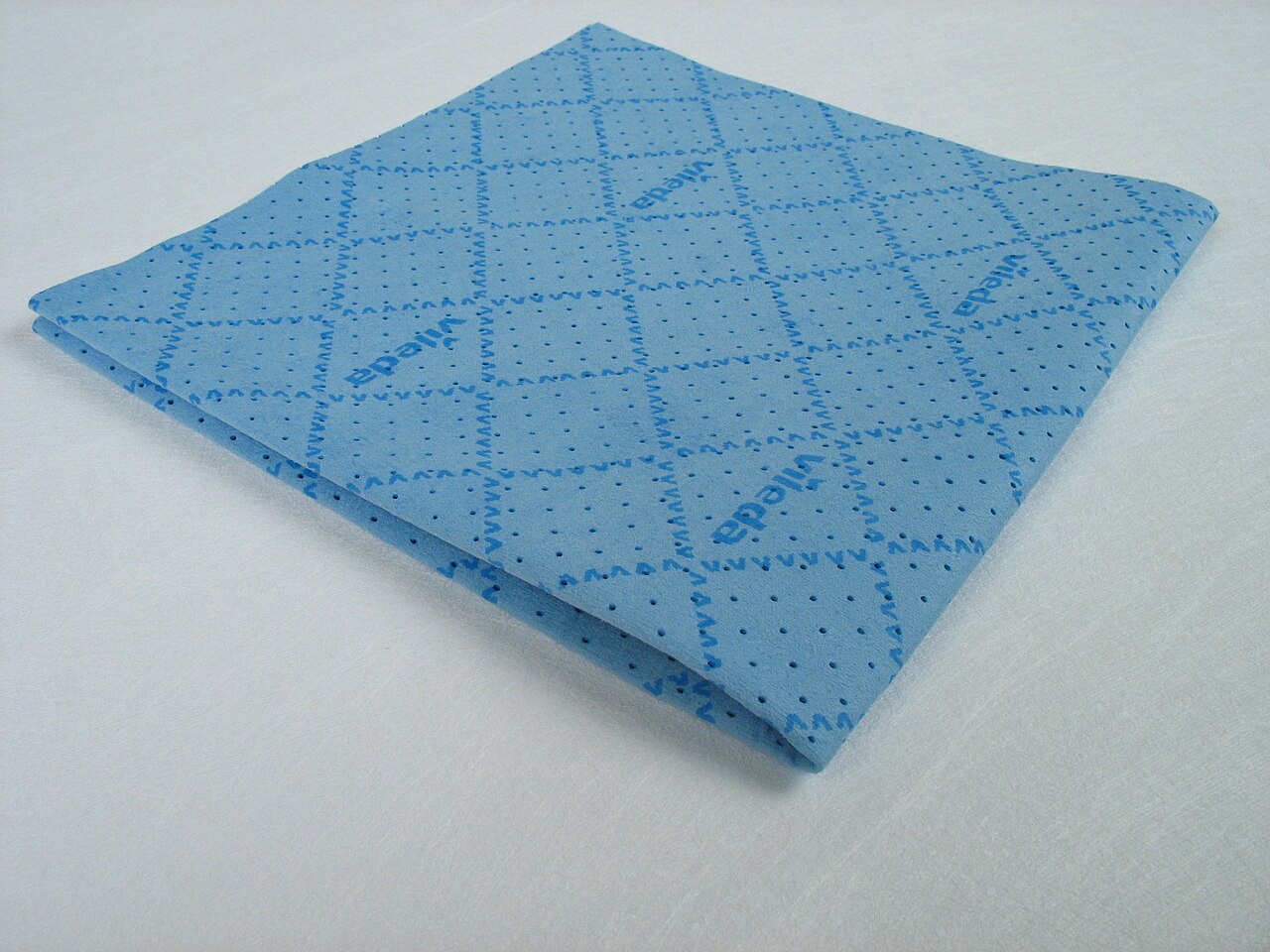

Key facts at a glance
- Drying towels absorb residual water after washing without rubbing the paint.
- Microfibre in waffle weave or plush is the standard; natural and synthetic leather as well as water blades are alternatives with different properties.
- What matters is absorbency, edge finishing and size – not appearance.
- Dry in straight passes from top to bottom and dab sensitive areas instead of rubbing.
- Drying towels do not belong in fabric softener; it clogs the fibres.
Verified test results
- We currently have no verified test results from independent publishers on this topic. As soon as published tests exist, we will add them here with their source.
Why drying decides the outcome on the paint
After rinsing, a film of water remains on the paint. If it stays, it dries and leaves limescale and mineral edges that can only be removed with polish. If it is wiped with a hard or dirty cloth, fine scratches appear that become visible in backlight.
Drying is therefore the last work step in which something can still go wrong. A clean, absorbent cloth and a steady hand are more important than speed. Anyone who rubs frantically over the paint after washing undoes part of the careful preparatory work.
A second point: water runs down afterwards. Mirrors, door handles, trim strips and wing edges only release residual water after a few minutes. It is therefore worth going over these areas once more at the end.
Materials at a glance
| Material | Typical properties | Suitable for |
|---|---|---|
| Microfibre waffle weave | Waffle structure with cavities, absorbs a lot of water | Large areas such as roof, bonnet and sides |
| Microfibre plush | Soft, dense fibre surface | Sensitive areas, follow-up wiping, interior |
| Microfibre window and glass cloth | Short fibres, little lint | Windows and mirrors |
| Natural or synthetic leather | Smooth surface, draws water off in passes | Classic drying by hand with feel |
| Silicone water blade | Pushes water ahead of it, absorbs little | Large, flat areas with a lot of residual water |
Waffle weave is the most common construction for drying the whole vehicle. The honeycomb structure creates cavities in which water disappears without the cloth becoming saturated immediately. Plush cloths are softer and denser; they are more suitable for sensitive areas and for follow-up wiping than for drying large areas.
Natural and synthetic leather work differently: they do not draw water into the fibre but push it ahead of them as a film. Anyone who can handle them dries quickly and with little pressure. A water blade absorbs hardly any water but directs it away; it is useful on large, flat surfaces but at a disadvantage on curves and edges.
Size, grammage and finishing
Larger cloths cover more area per pass and become saturated more slowly. Small cloths are more manageable and better suited to detail areas. For the whole vehicle, a combination has proven useful: a large cloth for the surfaces, a small one for corners, edges and mirrors.
Grammage describes the basis weight of the fibre. Higher values mean more material and more water absorption, but at the same time the cloth becomes heavier and is harder to wring out. A very light cloth absorbs little and is quickly soaked.
With finishing, the edge counts. Bound or overlocked edges prevent hard thread ends from being dragged over the paint. A look at the seam often says more about quality than the information on the packaging.
Drying correctly: step by step
- Bring residual water together. After rinsing clear, work from top to bottom so that water runs downwards and not over areas that are already dry.
- Lay the cloth flat. Place the cloth on and pull it in straight passes without pressure. This way the surface absorbs water without being scrubbed.
- Do not rub. Where water stands, dab it or leave the cloth in place briefly instead of wiping back and forth.
- Turn the cloth regularly. A dry side absorbs more than a wet one. Turn the cloth before it feels fully soaked.
- Sensitive areas last. Dry edges, trim strips and mirrors afterwards with a soft plush cloth.
- Pick up running water. After a few minutes, door handles and mirrors run down; go over these areas once more at the end.
- Do not place cloths on the ground. Place them on a clean surface or over the rim of the bucket so that no particles get into the fibre.
Drying in the sun is harder: the water evaporates faster than the cloth can keep up, and limescale edges remain. Work in the shade and in sections – first the roof, then the bonnet, then the sides.
Caring for and washing drying towels
After use, drying towels belong in the wash, not in the corner. Dirt and shampoo residues clog the fibres and reduce absorbency. Wash them separately from heavily soiled work clothing and without fabric softener; fabric softener leaves a film on the fibre that significantly worsens water absorption.
A detergent without additives is usually sufficient. With microfibre, it is better to avoid high temperatures because the fibre can suffer; the information on the care label takes precedence. Dry the cloths in the air or at low temperature in a dryer if the label allows it.
A simple rule helps keep things organised: keep cloths for paint, cloths for rims and cloths for the interior separate. A rim cloth that has picked up brake dust should never go on the paint again.
Typical mistakes
- Rubbing instead of pulling. Wiping back and forth with pressure creates scratches, especially on dark paint.
- Too small a cloth for the whole surface. A soaked cloth spreads water instead of absorbing it.
- Fabric softener in the wash. The fibre loses its absorbency.
- Placing the cloth on the ground. Sand and small stones stick to it and are carried over the paint the next time it is used.
- Drying in full sun. The water dries before the cloth absorbs it.
- One cloth for everything. Paint, rims and interior need separate cloths.
Suitable accessories
- Two buckets with Grit Guard for washing beforehand.
- Microfibre wash mitt for contact washing.
- Foam cannon for pre-washing; more on this in the article on the foam cannon.
- Glass cloth for windows and mirrors.
- Storage box for clean and separate cloths.
How our recommendations are created
We do not test ourselves. We evaluate published tests by independent publishers and name the publisher and source. We currently have no reliable results from independent tests on drying towels; therefore this page describes materials, technique and care instead of claiming a ranking.
Frequently asked questions
Which material is suitable for beginners?
Microfibre waffle weave is the obvious choice for the whole vehicle: high water absorption, robust, available in various sizes. A soft plush cloth for sensitive areas is a sensible addition.
How many drying towels do I need?
For one vehicle, a large cloth for the surfaces and a small one for corners and mirrors are usually enough. If you wash often, keep a second large cloth as a reserve.
Can I put drying towels in the dryer?
That depends on the care label. Many microfibre cloths tolerate low temperatures; high temperatures can damage the fibre. If in doubt, dry in the air.
Why do my cloths no longer absorb water?
Usually fabric softener or caring additives from the detergent are stuck in the fibre. Wash the cloths again without these additives.
Can I use one cloth for paint and rims?
Better not. Rim cloths pick up brake dust and metal particles that leave scratches on the paint. Keep the cloths separate.
What helps against water spots after drying?
Water spots occur when residual water dries on. Work in the shade, dry promptly and pick up running water on mirrors and handles once more at the end.
Conclusion
Drying towels are a small tool with a big effect: they decide whether washing ends with clean paint or with water spots and fine scratches. Waffle weave for the surfaces, plush for sensitive areas, plus a clean wash without fabric softener – that is all it takes. Anyone who also builds up the pre-wash cleanly saves most of the work when drying; you can find the instructions under hand washing and in the overview of the car washing category.