
Car Leather Care: Overview
Leather in the vehicle interior is found in places that are used every day: seat surfaces, side bolsters, steering wheel rim, armrests and door trims. Skin grease, sweat, dust, crumbs and abrasion from clothing collect there. Add sunlight, and the surface dries out and becomes brittle. Regular care keeps the material supple and prevents dirt from migrating into pores and seams.
Leather care is one of the car care products that cover cleaning, care and protection of vehicle surfaces. For the interior, this results in a fixed sequence: clean first, then care, then protect. If you apply care product to a dirty surface, you spread the dirt and work it into the surface.
How often you care for it depends on use, sunlight and soiling. A vehicle used for many short journeys, with children or dogs, needs attention more often than a rarely used car. Instead of fixed intervals, a look at the material helps: if the leather looks greasy and shiny, it is usually dirty. If it looks matte and dry, it lacks care.
Verified test results
- We currently have no verified test results from independent publishers on this topic. As soon as published tests exist, we will add them here with their source.
Which Leather Types Are There in the Vehicle?
Not every leather tolerates the same treatment. Before you choose a product, it is worth asking which material is installed at the respective place. You can find this information in the vehicle owner's manual or on the care instructions for the equipment.
Smooth Leather
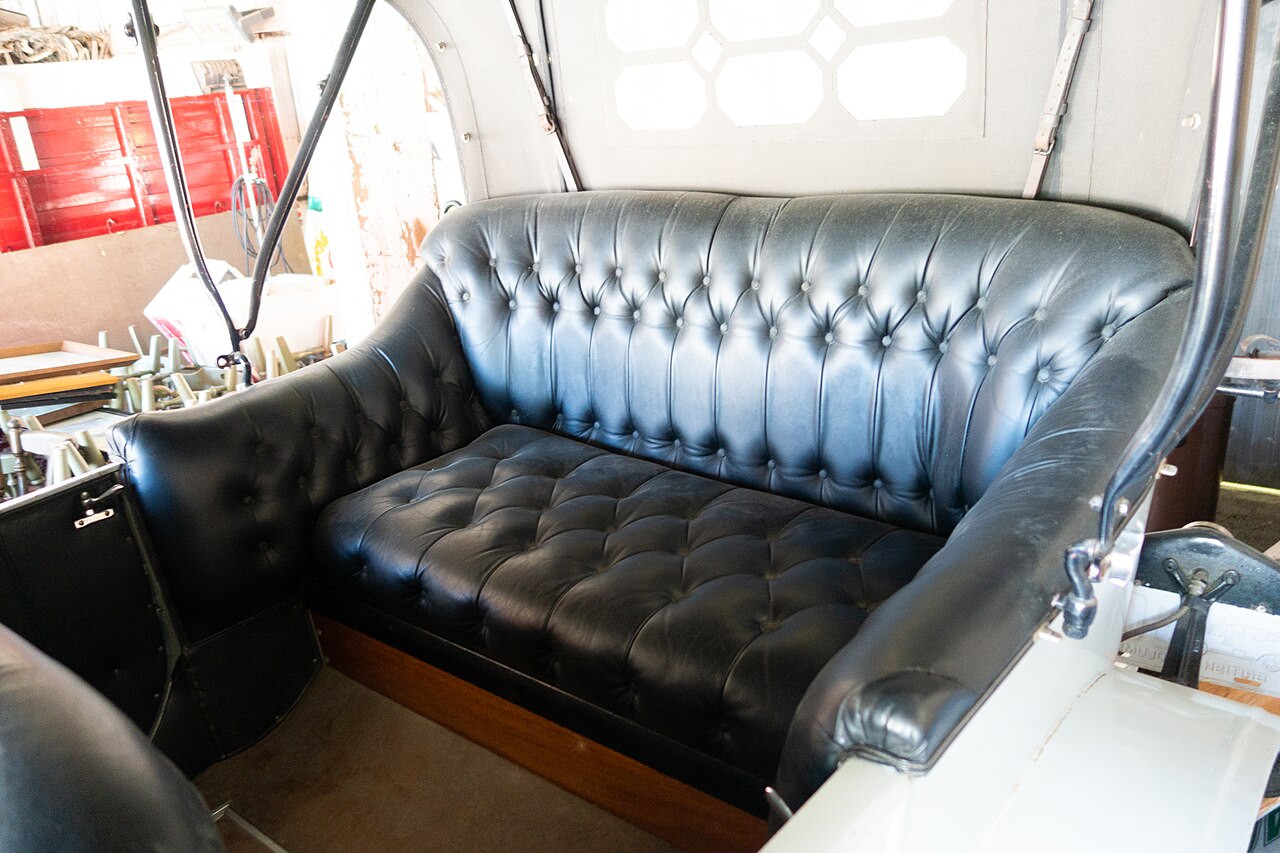
Smooth leather is the most common variant for seat surfaces and steering wheels. It has a closed, usually dyed and sealed surface. Dirt mostly remains on the surface and can be removed with a mild cleaner and a soft cloth. It is important not to use hard brushes or abrasive products, otherwise the seal will get fine scratches.
Perforated and Ventilated Leather
With perforated seats, dirt sits not only on the surface but also in the small holes. Cleaner especially easily remains trapped there. Work with little liquid so that nothing runs into the upholstery, and pick up the cleaner again with a cloth. A soft brush with short bristles is suitable for the holes; vigorous scrubbing presses the dirt deeper into the perforation.
Alcantara and Textile Composites
Alcantara and similar materials are not leather but are often combined with leather. They react sensitively to oiling care products and to too much moisture. Here the rule is: use only products that the manufacturer has expressly approved for these materials, and then let the surface dry well.
Synthetic Leather
Synthetic leather consists of a backing layer with a plastic surface. It does not absorb care substances; it is treated only on the surface. Oiling leather care offers no advantage here and can leave a greasy film. Mild cleaning and wiping dry afterwards is usually sufficient.
The Product Groups of Leather Care
Leather care is not a single product but a group of products with different tasks. Keeping them separate prevents cleaner from being used as care or care from being applied to dirt.
Leather Cleaner
Leather cleaners loosen grease, sweat and dust from the surface. They are usually available as a spray, foam or liquid with an applicator sponge. Mild, pH-neutral formulations that do not require strong solvents are sensible. For heavy soiling there are intensive cleaners; they do not belong in routine care but remain the exception.
Leather Care Cream and Leather Grease
Care creams and leather greases supply the material with fats and oils and keep it supple. They are applied thinly and removed with a dry cloth after a dwell time. Too much product leaves a shiny film that attracts dust and feels slippery on smooth leather. Leather grease is richer and is more suitable for stressed areas than for the entire seat surface.
Leather Preservers and Protective Products
Preservers and protective products place a thin film on the surface that repels dirt and helps protect the colour from fading. They are used after cleaning and after care. Compatibility with the leather surface is important: on sealed smooth leather they act differently than on open-pored leather.
Leather Care Wipes
Moist care wipes for on the go are practical for quick interim cleaning while travelling. For regular care at home, they do not replace a combination of cleaner, care and protection because they usually only clean and hardly re-oil.
Purchase Criteria: What to Look for in Leather Care
| Criterion | Why it matters | How to recognise it |
|---|---|---|
| Compatibility with the leather type | A product for smooth leather can attack open-pored leather or Alcantara | Manufacturer's information on the leather type on the packaging |
| Mild formulation | Aggressive cleaners attack colour and protective layers | Indication of pH-neutral or mild cleaning |
| Re-oiling effect | Dried-out leather becomes supple again | Claimed as care cream, leather grease or lotion |
| Low-residue drying | Grease films attract dust and shine unnaturally | Instruction to remove with a dry cloth |
| Yield | Small amounts are usually sufficient with a thin application | Fill quantity and type of dispensing |
| Application | Foam and sponge can be distributed more evenly than liquid drops | Spray head, pump dispenser or sponge attachment |
| Odour | Strong solvent odours burden the interior | Information on fragrance note and ventilation |
| Storage | Frost and heat change the formulation | Storage instructions on the packaging |
Leather Care Step by Step
1. Prepare
Park the vehicle in the shade if possible. Heated leather absorbs products unevenly, and cleaners dry too quickly. Have clean cloths ready and work one area after another instead of treating the entire interior at the same time.
2. Vacuum and Remove Dust
Before liquid comes into play, remove crumbs, sand and dust with a vacuum cleaner and a soft brush. Carefully fold seats with adjustable backrests forward so that the gaps between the seat surface and backrest are also cleaned. Otherwise sand acts like sandpaper as soon as you run the cloth over it.
3. Clean
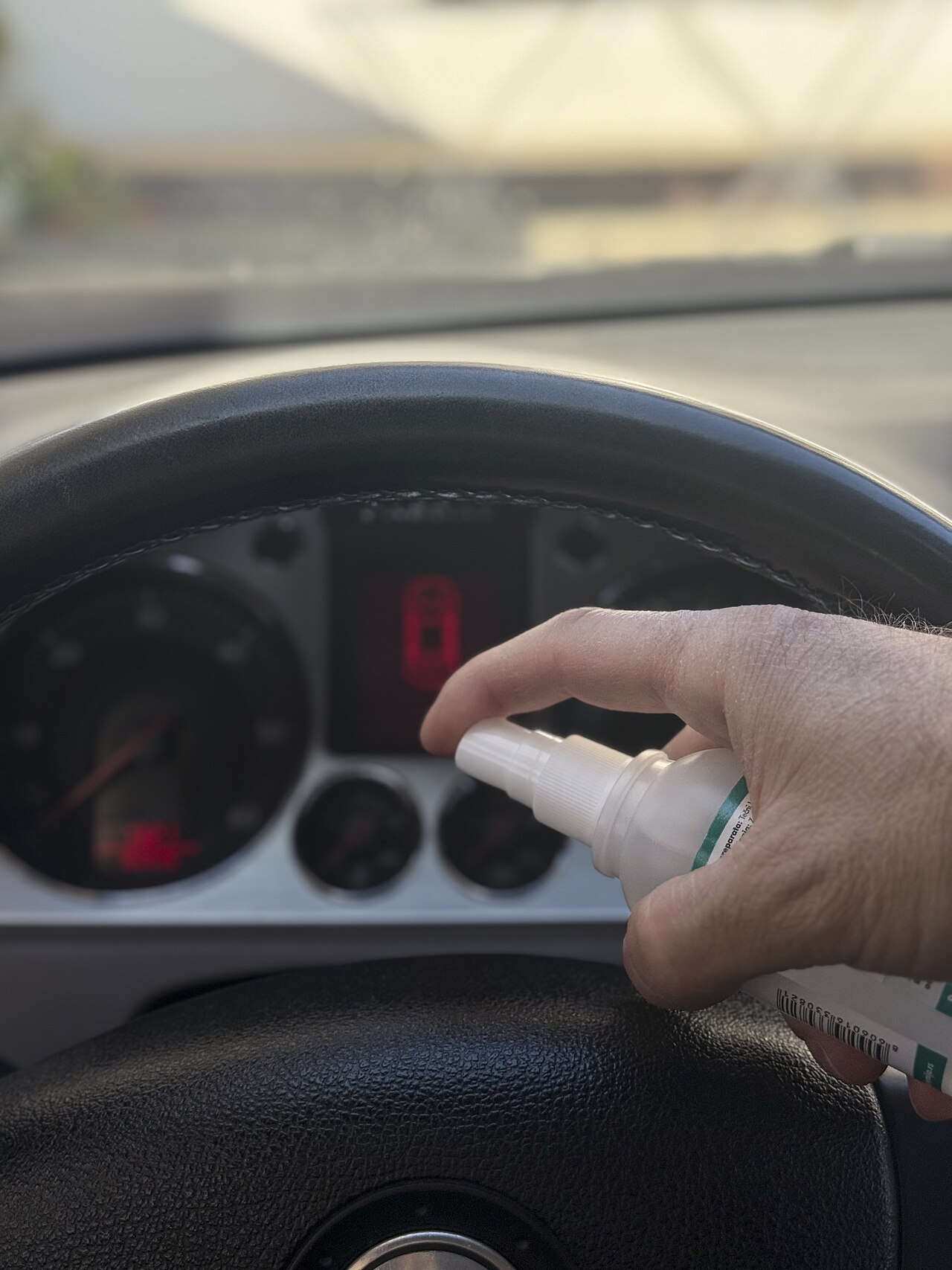
Apply the leather cleaner thinly to a sponge or soft cloth and work in small sections. Do not spray directly onto the leather if there is a risk that liquid will run into seams or perforations. Pick up the loosened dirt with a clean, damp cloth and change the cloth as soon as it is dirty. Then let the surface dry before care follows.
4. Care
Apply care cream or leather grease sparingly and distribute evenly. After the specified dwell time, remove excess product with a dry cloth. Particularly stressed areas such as side bolsters and the steering wheel rim need somewhat more attention than the centre of the seat.
5. Protect and Let Dry
As the final step, apply a preserver or protective product thinly to the dry surface. Then leave the vehicle standing for some time and ventilate well so that residual moisture can escape. Do not put weight on seat surfaces again until everything has dried.
Typical Mistakes
- Too much product: A thick application does not care better but leaves a grease film that binds dust.
- Using cleaner as care: Cleaners loosen dirt but do not re-oil. Without a care step, the leather remains dry.
- Care on dirt: Anyone who skips the cleaning step works dust into the surface.
- Hard brushes: They leave scratches on sealed smooth leather and roughen the surface.
- Direct spraying: Liquid in seams and perforations leads to stains and long drying time.
- Working in blazing sun: Heat lets products dry on and creates uneven edges.
- Wrong product for Alcantara: Oiling leather care sticks the fibres together and leaves stains.
Safety, Material Compatibility and Storage
Work with doors or windows open so that fragrances and solvents can escape. Gloves protect the skin, especially with intensive cleaners. Before first use, read the manufacturer's information on the packaging and observe the compatibility instructions; they are the most reliable basis for deciding whether a product is suitable for the installed material.
Test a new product first in an inconspicuous place, for example on the underside of the seat surface. This way you can recognise changes in colour or surface before the entire seating is treated. Store products cool and frost-free; heat in the vehicle interior can change the formulation. Do not decant leftovers into containers that are not labelled.
Suitable Accessories
You do not need an extensive range for leather care. Soft microfibre cloths for application and removal, a small applicator sponge for measured application, a soft brush for seams and perforations, and a vacuum cleaner with a crevice nozzle for the preparatory work have proven useful. For quick interim cleaning on the go, a moist care wipe is sufficient. How to wash and care for cloths properly so that they do not cause scratches is explained in the guide to microfibre cloths.
How Our Recommendations Are Created
We do not carry out our own product tests. Our classification of leather care products is based on generally recognised application instructions and on manufacturers' information on compatibility. Where independent tests with reliable results are available, we name them with publisher and source; we do not award our own ratings, seals or awards.
Frequently Asked Questions
How often should I care for leather in the car?
A fixed schedule is less useful than orienting yourself to the condition. Clean when the surface looks greasy or feels rough; follow up with care when the leather appears matte and dry. With heavy use or a lot of sun, correspondingly more often.
Can I clean leather with normal interior cleaner?
Only if the manufacturer expressly approves it for leather. Many interior cleaners are designed for plastic and can attack colour or protective layers on leather. A mild leather cleaner is the safer choice.
What helps against shiny, greasy seats?
Greasy shine is usually a sign of dirt and skin grease. Cleaning with a mild leather cleaner and then applying a thin care layer brings back the matte surface. Vigorous scrubbing is not necessary and damages the seal.
May I use leather grease on perforated seats?
With perforated leather, restraint is sensible because grease remains in the holes and impairs ventilation. Work with little product and remove excess thoroughly; if in doubt, observe the manufacturer's information on the leather type.
How do I treat Alcantara in the seat area?
Alcantara is not leather and needs its own products. Oiling leather care sticks the fibres together. Use only products approved for Alcantara, work with little moisture and let the surface dry well.
Why does my leather attract dust after care?
Most often too much care product was applied and not completely removed. A thin film is sufficient. Remove excess with a dry cloth and then ventilate the interior well.
Conclusion
Car leather care is not a question of a single miracle product but a question of sequence: vacuum, clean, care, protect. Anyone who knows the leather type, uses mild cleaners and doses care sparingly keeps seats and steering wheel well cared for over the long term. For the other surfaces in the interior, it is worth taking a look at the interior cleaning guide; cockpit and plastic parts are covered by the page on cockpit care. An overview of all topics in the category is provided by the Interior page.